
Pathful Junior's lesson content connects to reading and writing, social studies, science, and math by career cluster and grade band. Here's how to find those connections and use them.
Most curriculum decisions in elementary school start with the same question: what does this connect to? If a tool doesn't link to what you're already teaching, it doesn't last past October. Elementary educators don't have a standalone career exploration period, and they shouldn't need one.
Pathful Junior connects to the subjects you're already teaching in two distinct ways. The platform's lesson content spans vocabulary, science, math, social studies, visual arts, and social-emotional skills, all organized by career cluster and grade band in the Pathful Junior Curriculum Grid. This article focuses on the four core academic subjects, but the full grid covers more. Beyond what the platform structures for you, there are ways to extend career content into your regular instruction that don't require redesigning a unit. This article walks through both.
📎 Planning resources: Download the Pathful Junior Curriculum Grid to see subject connections by career cluster and grade band. A Scope and Sequence document is also available to help you map Pathful Junior across the school year (coming soon).
Reading and writing
In the lessons
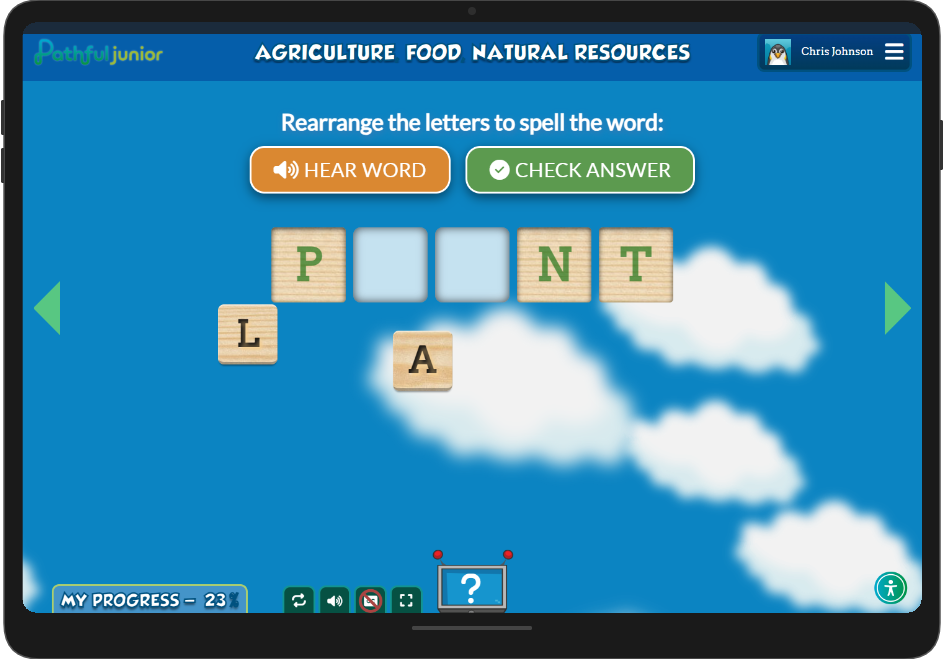
Every career cluster in Pathful Junior includes vocabulary matched to its grade band, drawn from the language of that career field. In K–1, the Agriculture cluster introduces words like produce, conserve, and natural resources. By grades 2–3, clusters like Energy and Health Science bring in terms like reservoir, magma, pediatrics, and triage. In grades 4–5, the vocabulary grows more technical: the Architecture cluster introduces excavate, insulate, and replica; Finance introduces income, expense, and debt.
Classroom ideas
K–2
- Word wall: Pull vocabulary from whatever cluster lesson you're assigning that week and add those words to your word wall.
- Draw and label: After watching a career video together, have students draw and label one thing they noticed.
- Phonics and word study: Career names work well as word study material. Clapping syllables in words like veterinarian or conductor gives early readers a concrete task without requiring them to read independently.
- Oral language check: After any career video, ask the class: "What's one word from today that you want to remember? What does it mean in your own words?"
- Picture walk: Use career images before a related read-aloud to build vocabulary and prior knowledge before students encounter the text.
- Career interview: Have students generate questions they would ask someone in that career; works as a discussion or speaking activity.
- Vocabulary sort: Group cluster terms into categories before or after the lesson: tools, people, places, actions.
- Two-column notes: After any lesson, have students fill out a two-column chart: what I noticed / what I wonder. Students can draw responses rather than write.
3–5
- Writing prompt: Use cluster content as a writing subject with real stakes; require students to use some of the cluster's vocabulary as a word bank. The Human Services cluster works well for writing about someone in your community who helps others. The Government cluster works well for writing about an issue that matters to you and what should be done about it.
- Day in the life: Students write from the perspective of a professional in any cluster, walking through a workday.
- Letter from…: Students write as a professional explaining their job to a younger student; students have to think carefully about what a younger reader would need explained and how to explain it simply.
- Career interview: Students generate five questions they would ask someone in that field; works as a speaking activity too.
- Compare-contrast: Have students compare two careers from the same cluster using a T-chart, then write a paragraph explaining the similarities and differences.
- Vocabulary sort: Group cluster terms into categories before or after the lesson: tools, people, places, actions.
- Two-column notes: After any lesson, have students fill out a two-column chart: what I noticed / what I wonder.
- Nonfiction pair: Use the career cluster as background knowledge before a related read-aloud; the career content means students arrive at the text with relevant knowledge already in place.
Social studies
In the lessons
Social studies connections run through nearly every career cluster, spanning geography, history, and economics across all grade bands. In K–1, the Transportation cluster introduces cardinal directions through a visit to China, including the history of the Great Wall. At grades 2–3, the geographic range expands: Hospitality and Tourism takes students to Australia, Energy explores Iceland, and the Human Services cluster introduces Dr. Martin Luther King Jr. in a discussion about advocacy. By grades 4–5, the content deepens into history and civics: Government and Public Administration covers the three branches of government, Washington DC landmarks, Abraham Lincoln and the Gettysburg Address, and the Women's Armed Forces Integration Act.
Economics content threads through multiple clusters as well. Transportation introduces import and export at K–1. By grades 4–5, Business and Administration covers supply and demand, entrepreneurship, and how businesses are structured, and Finance introduces banking terms, budgeting, and credit.
Classroom ideas
K–2
- Community helpers unit: Assign Law and Public Safety or Human Services. The careers students encounter map directly onto what they're already learning.
- Maps and cardinal directions: Use the Transportation cluster's geographic content to introduce or reinforce directional skills; "In the video, the workers had to know exactly where things were going. How would they figure out which direction to travel?"
- Pin the map: After any cluster that features a specific location, mark it on a class map; over the year, students build a cumulative geographic record.
- Community connection: After any lesson, open a discussion: "Does anyone in our town do a job like the ones we just saw? What would be the same? What would be different?"
- Goods and services sort: Have students sort careers from any cluster into two groups: those that produce goods and those that provide services. Works best in grades 1–2; K students will need teacher scaffolding to engage with the distinction.
- Needs and wants: The Transportation cluster introduces goods, import, and export at K–1. After the lesson, have students sort which goods from the video are things people need versus things people want.
3–5
- Government and Public Administration cluster: Assign when your class is studying how government works. It covers the three branches, Washington DC landmarks, Abraham Lincoln and the Gettysburg Address, and the Women's Armed Forces Integration Act.
- World geography: Several clusters take students to specific locations around the world and across the United States. Hospitality and Tourism visits Australia at grades 2–3 and diverse American communities including Koreatown and the Navajo Nation at grades 4–5. Energy visits Iceland and Costa Rica. Architecture visits Egypt and New York City. Arts, A/V Technology and Communications visits Rome and Florence.
- Research extension: Have students pick one historical figure or landmark from the lesson and find one additional fact not covered in the video.
- Economics and current events: Assign Business and Administration alongside a unit on how communities and economies work; the cluster covers supply and demand, what entrepreneurs do, and how businesses are structured. Assign Finance alongside a money or budgeting unit; it gives abstract concepts like debt, income, and investment a career context.
- Then and now: After any cluster with historical content, use as a discussion or writing prompt: how has this career or location changed over time, and what might it look like in 20 years?
- Point of view: After watching a career video, ask students whose perspective it shows and what it might be leaving out. Works well as a discussion or short written response.
Science
In the lessons
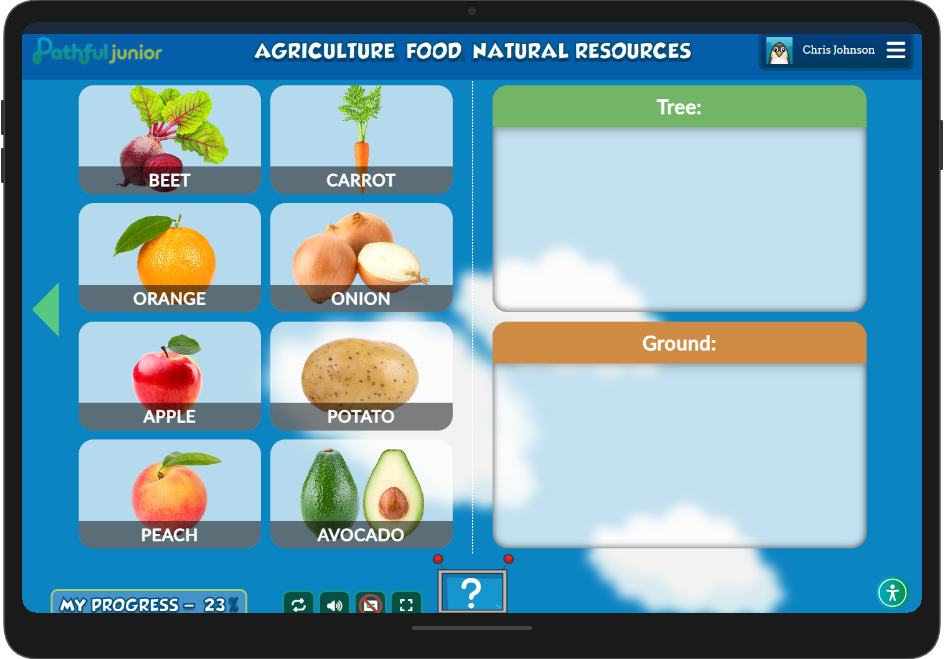
Science content appears in multiple clusters across all grade bands. In K–1, for example, Agriculture lessons explain what plants need to live and introduce types of farms and natural resources. At grades 2–3, the Hospitality and Tourism cluster introduces marine life through an exploration of the Great Barrier Reef, and the Energy cluster covers fossil fuels and geothermal energy. The Education and Training cluster at grades 2–3 includes a lesson on entomology and butterfly facts. In grades 4–5, the STEM cluster covers the scientific method, living versus non-living matter, the solar system, and careers in science and engineering. The Manufacturing cluster introduces states of matter and explains how turbofan engines work. The Energy cluster adds content on alternative energy sources and electrical systems.
Classroom ideas
K–2
- Plants and living things unit: Assign Agriculture. It introduces natural resources, types of farms, and what plants need to live in language appropriate for early elementary.
- Ocean animals unit: The Hospitality cluster's Great Barrier Reef content introduces clownfish, starfish, turtles, dolphins, and sharks in a real-world context; "We've been learning about animals that live in the ocean. What's one animal from this video that surprised you?"
- Predict and revise: Before the lesson, students predict what scientists in this field do; after, they revise with what they learned.
- Sort by setting: Have students sort careers from any cluster by where professionals work: outdoors, in a lab, at a hospital, on a farm. Follow with a discussion about why setting matters for the job.
- Tools inventory: Have students identify the tools a professional in this cluster uses; works as a whole-class discussion after any lesson.
- Living vs. non-living: Have students classify what professionals in various careers work with as living or non-living. Agriculture, Health Science, and Hospitality all have content that works well for this: plants and farm animals, the human body, and Great Barrier Reef animals.
- Student question board: After any lesson, students share one question they still have; use them to launch a class investigation.
3–5
- Scientific method unit: Use the STEM cluster as an applied extension. Students encounter vocabulary they've already studied in the context of careers where those skills are part of the daily job.
- States of matter unit: The Manufacturing cluster pairs well. It introduces solid, liquid, and gas in the context of metalworking; "What would happen if a metal worker didn't understand the difference between a solid and a liquid?"
- Career-concept match: Have students identify the core science concept underneath a given career. Photosynthesis connects to Agriculture, ecosystems to Hospitality, states of matter to Manufacturing.
- Tools inventory: Have students identify the scientific tools a professional in this career uses and the concept behind each one; works as a discussion or written activity.
- Inquiry extension: Close the video and ask "What question do you still have about how this works?" That question becomes the launch point for student research or a class investigation.
Math
In the lessons
Math connections in the platform are more targeted than in ELA or social studies, and they're concentrated in grades 3–5. Where they appear, they're tied directly to career concepts: Finance includes activities on fractions, budgeting, and interpreting graphs; Architecture covers geometry, measuring angles and distances, and protractor use; and STEM includes an activity on interpreting scientific data using fractions. Manufacturing pairs a geometry activity with a step-sequencing exercise, and Marketing includes a data charting activity. At grades 2–3, the Health Science cluster introduces a least-to-greatest ordering activity in the context of a lesson on the body.
Classroom ideas
K–2
- Class survey + graph: After students have explored several clusters, survey the class on their favorites and build a bar graph. Students practice counting, sorting, and comparing using data they generated themselves.
- Measurement hooks: Chefs measure ingredients, farmers measure fields, architects measure buildings. When measurement vocabulary comes up in a career video, connect it to what students are working on in math.
- What would you measure?: Have students identify what a professional in a given career needs to measure and which tools they'd use; works as a class discussion after any lesson.
- Sequence it: Have students put the steps of a career process in order using picture cards; works for any cluster with a clear process component.
- Estimation challenge: How many patients might a doctor see in a day? How many bricks in a building? The career scenario gives students a reason to estimate rather than just a number to guess.
- Cost it out: Have students calculate what it would cost to buy the tools for a specific career; works best in grades 1–2 using simple addition.
3–5
- Finance cluster: Assign when your class is working on fractions, budgeting, or reading graphs. The cluster includes a dedicated activity for each: converting fractions, budgeting basics, and interpreting graphs, all set in the context of financial careers.
- Architecture cluster: Links directly to a geometry unit. Students encounter angles, measurement, and structural problem-solving in the context of civil engineers and construction professionals; "Architects have to know exactly how long each piece of a structure needs to be. What math skills do you think they use every day?"
- STEM cluster: Includes an activity on interpreting scientific data using fractions; works well alongside a unit on data and measurement.
- Career word problems: Once students know what a career involves, have them write their own math word problems using it as the scenario.
- Sequence it: Manufacturing includes a built-in activity where students order the steps of an assembly process. The same approach works with Architecture: have students sequence what happens from design to construction before a building can open.
- Cost it out: Have students calculate what it would cost to equip a professional for a specific career; use it as a multiplication and budgeting exercise.
Using the Curriculum Grid to plan ahead
The Pathful Junior Curriculum Grid maps all 17 career clusters against subject areas and grade bands in a single reference. Rather than planning Pathful Junior sessions separately from your instruction, use it to identify which clusters align with what you're already teaching that week or month.
📎 Download the Curriculum Grid · 📎 Download the Scope and Sequence (coming soon)
The most reliable way to find your own connections is to start with your current unit rather than the cluster. Ask which careers involve the concepts your students are studying this week. That question will point you to the right cluster more reliably than browsing the grid by career field. A class studying ecosystems finds Agriculture. A class working on measurement finds Architecture. A class reading about community helpers finds Human Services or Law and Public Safety. The career content gives academic vocabulary and concepts a real-world frame. The curriculum gives career exploration a place to land.
Was this article helpful?
Thanks for letting us know!

Keep exploring.
Can't find what you need?
Our support team is here to help you make the most of Pathful.