By third grade, most students are ready to browse Career Central, work through Lessons, and reflect on their Interest Assessment results on their own. Here's how to hand the exploration over, and where staying involved still matters.
A lot of career exploration in upper elementary still runs from the front of the room. The teacher pulls a career up on the projector, the class watches together, and everyone moves at the same pace. It works, but it holds students back from something most of them are ready for by third grade: reading a profile, finding a video, and following their own questions from one career to the next without being walked through each step.
Grades 3–5 are where you can hand that over. Instead of leading students through Pathful Junior, you set up an exploration, step back, and spend your time talking with them about what they found. This article walks through how to make that handoff, and where staying involved still matters.
Hand the exploration over in Career Central
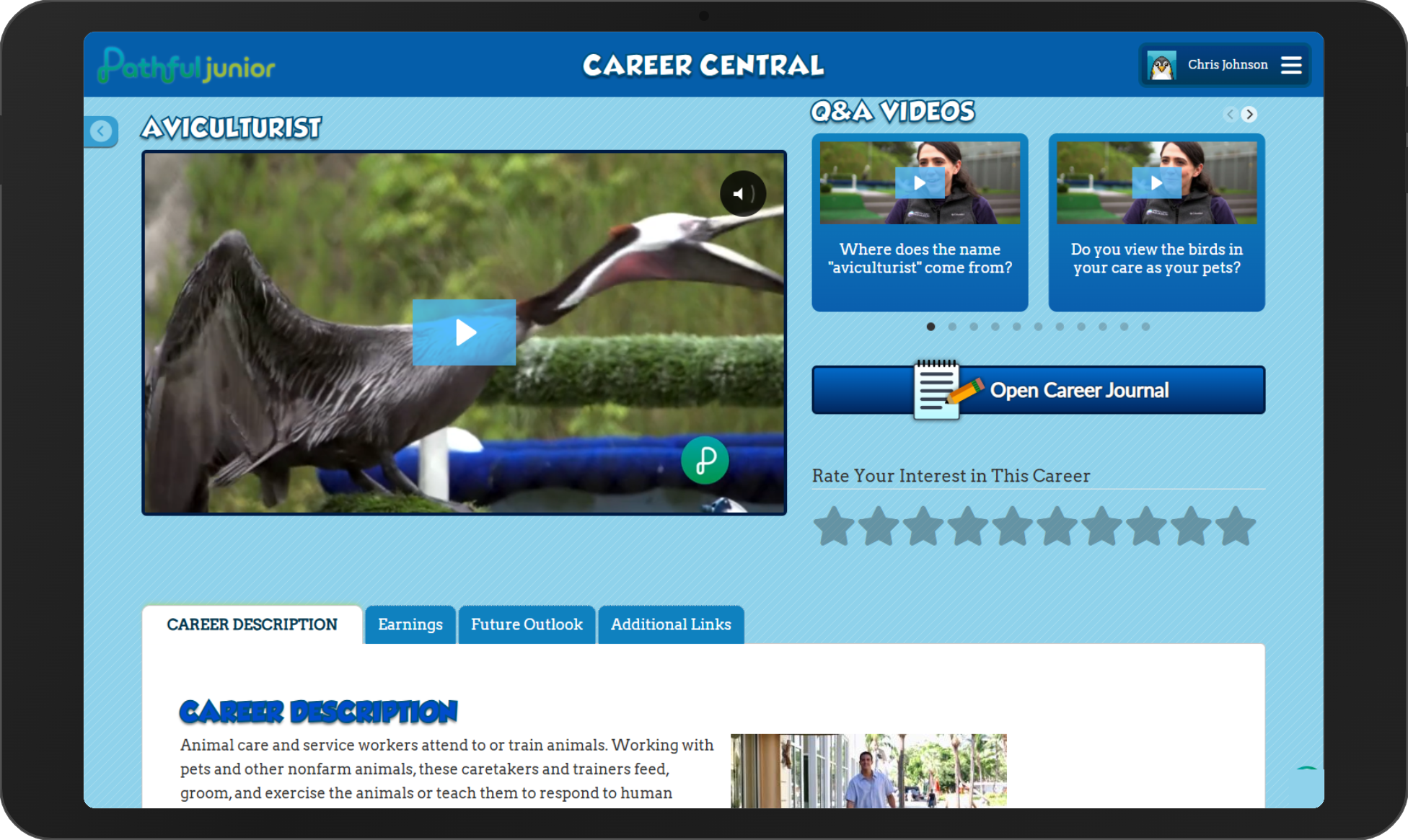
Career Central is the natural place to start the handoff. Students can browse it on their own: they pick a cluster, open a profile, watch the virtual job shadow video, read the description, and move to the next one at their own pace.
What makes independent browsing work is giving students a reason to choose rather than a list to finish. Set a light structure, for example:
- Pick three careers from different clusters, watch each video, and note one thing about each that surprised you.
- Find a career you'd never heard of before today and be ready to tell the class what it is.
- Choose a career, then find a second one that shares a skill with it.
The Career Journal gives students a place to keep those notes inside the platform. It's a set of prompts for recording what they notice about a career, and by grades 3–5 most students can type into it and return to it on their own.
Let students work through Lessons on their own
Where Career Central is open browsing, Lessons give students a structured path through a topic, and by grades 3–5 they can follow one without much help from you. Each lesson pairs short videos with activities, and progress saves, so a student who runs out of time can pick it back up later. Point a student toward a lesson tied to a cluster they gravitated toward, or let them choose their own.
Turn the Interest Assessment into a goal-setting conversation
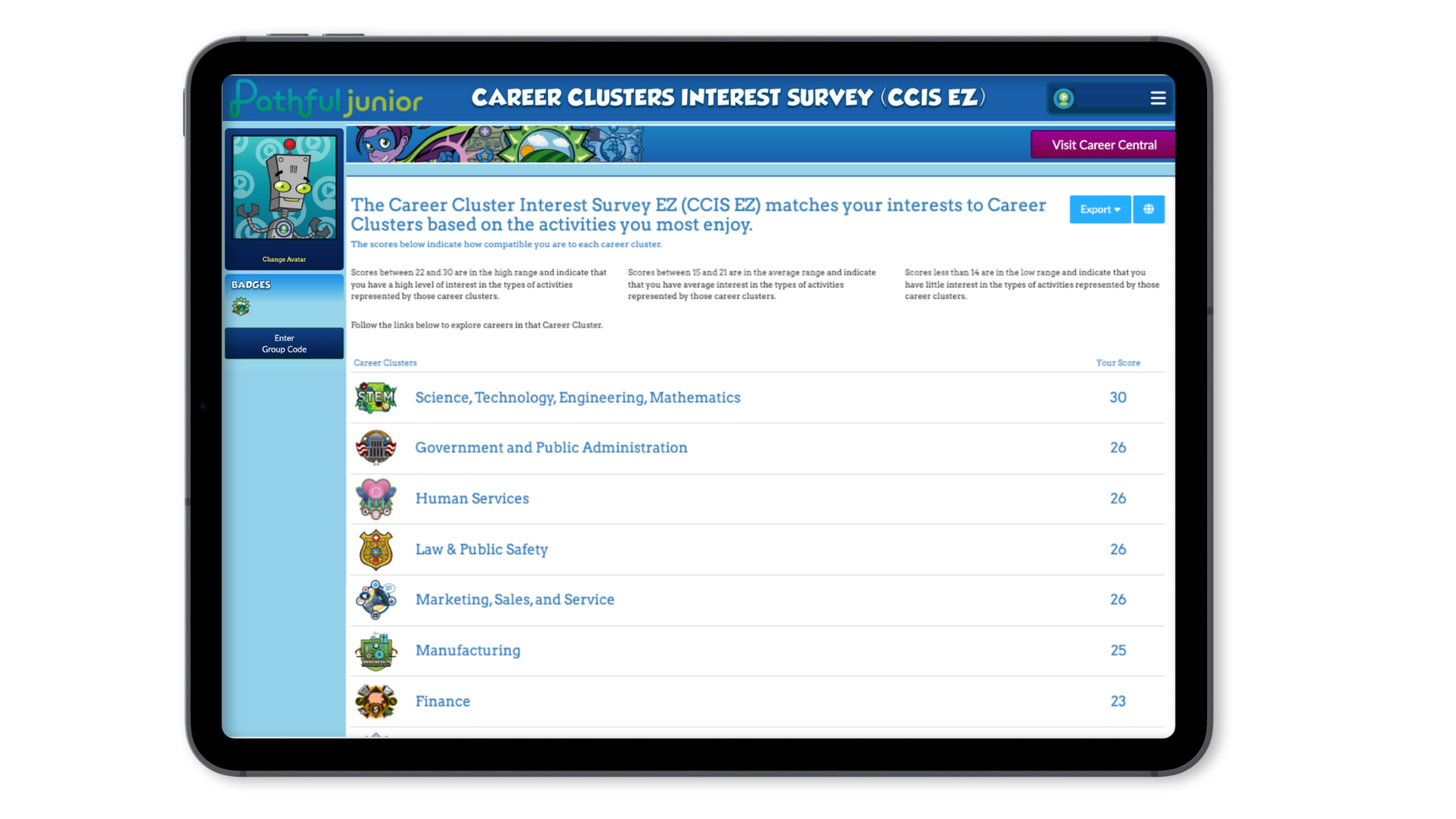
Students take the Interest Assessment individually, and each student gets personalized results they can view themselves. In grades 3–5, those results can anchor a short one-on-one or small-group conversation about what a student wants to look into next.
After a student finishes, pull them aside or gather a small group and use the results as a starting point:
- Which of these interest areas feels right, and which surprised you?
- Pick one to explore first in Career Central this week.
- What's one career in that area you want to know more about?
The conversation gives the student a specific next step instead of a screen full of options, and it gives you a quick read on where each student's curiosity is pointing.
Use career videos as the anchor for reading and writing
In upper elementary, the reading and writing you already teach can run through the career videos themselves. When students turn what they watch into something they write, they engage with the video more closely, and you connect career exploration to the literacy work already on your plate. The virtual job shadow videos in Career Central give you a ready anchor for it.
A few ways to build on a video:
- Written reflection: after watching, students write about whether they'd want the job and why, using specifics from the video.
- Compare and contrast: students watch two careers in the same cluster and write about how the daily work differs.
- Persuasive writing: students pick a career and write a short piece arguing why it matters, or why a classmate should consider it.
- Vocabulary: students pull the job-specific words they heard and define them in their own terms.
None of this requires a separate writing block. It's the writing you'd assign anyway, with a career video as the prompt. The Career Journal is a good home for the shorter responses; longer pieces can live wherever your students already write.
Connect exploration to what comes next
This independence is worth building because of what comes after it. A student who has spent a year choosing what to explore and reflecting on it arrives in middle school already able to talk about what interests them. That is the groundwork that later elective and pathway decisions build on.
You don't need to make that case to your students. Keep the exploration student-driven and the connection follows on its own. What helps is treating the Interest Assessment results and the Career Journal as a record that grows over the year, something a student can look back on to see how their thinking has changed.
Start with one session
By the end of upper elementary, the aim is students who can open Pathful Junior, choose where to go, and tell you why. They follow their own questions and write down what they find.
If you're moving a class from teacher-led to student-led, start with a single session. Set a simple task in Career Central, like picking three careers to compare, then use the time to move around the room and ask what pulled each student to their choices. Once you've seen how much they can do on their own, handing over more of it gets easier.
Was this article helpful?
Thanks for letting us know!

Keep exploring.
Can't find what you need?
Our support team is here to help you make the most of Pathful.